
Forward Deployed
AI Engineering
Move beyond AI prototypes. Learn to discover complex enterprise problems, design and integrate production-grade AI systems, evaluate reliability, navigate customer constraints, and own measurable outcomes from discovery through operational handover.
A Forward Deployed AI Engineer owns a customer outcome, not a development backlog. The work is done when the system runs in the customer's hands and someone there can keep it running.
- 60 hoursinstructor-led learning
- Two tracksFDE Practice · Advanced AI Engineering
- 15 moduleswith applied engineering exercises
- Four gatesassessed delivery gates
- Capstoneworking integration + architecture defense
- From 14 Nov 2026weekend cohort · weekday cohort from 18 Nov
Try the first two sessions risk-free. Planned starts 14 Nov (weekend) and 18 Nov (weekday).
- 01Discover
- 02DecideG1 · Context
- 03DesignG2 · Architecture
- 04Integrate
- 05EvaluateG3 · Integration
- 06Operate
- 07Hand overG4 · Defense & Handover
- 08Reuse
Every section of this programme follows this order. Each gate has a written output and a rubric; passing means the output holds up to questioning, not that a demonstration ran.
Designed and taught by the engineer who delivered Generative and Agentic AI enablement inside Walmart (Procurement, Cataloging & AP) and Novo Nordisk India, FDE capability programmes for Tredence and Persistent Systems, and recent training engagements for Credit Agricole, Mphasis, Maximus, Wipro, EY, Hexaware and Kotak Mahindra Bank.
The four gates and five artefacts are not a course device. They are the working framework used in live forward-deployed engagements, published in full at mayurpatil.ai/forward-deployed-engineering.
Two cohorts. Pick the rhythm that fits your week.
Both cohorts deliver the same 60 instructor-led hours, both tracks and all four gates. Sessions run live on Indian Standard Time with equivalents shown for your location.
Saturdays and Sundays
- 8:00 – 10:30 pm IST
- Full 60-hour programme, both tracks, all four gates
Wednesdays, Thursdays and Fridays
- 8:00 – 10:00 pm IST
- Full 60-hour programme, both tracks, all four gates
Try the first two sessions risk-free
Attend the first two sessions of your cohort. If you decide it is not for you, tell us before the third session and the full fee is refunded. From the third session onwards the seat is confirmed and the fee is non-refundable.
Planned start dates. Each cohort is confirmed to enrolled participants at least 7 days before it begins. Session timing may be adjusted so that it suits all confirmed participants. If we move a start date and the new date does not suit you, the full fee is refunded.
Why this program
Building a model-powered demo is only one part of enterprise AI delivery. Real deployments demand business discovery, system architecture, integration with existing workflows, security boundaries, measurable evaluation, operational reliability and user adoption. This program combines customer-facing engineering judgement with advanced AI implementation.
A working model is not a running system.
The demo ran on an export. Production needs the live source, access controls, missing fields and two definitions of "customer". Most pilots stall at that boundary.
Business problems arrive unspecified.
Stakeholders define goals as cost savings, not embeddings or APIs. Discovery turns fuzzy requests into measurable outcomes and written non-goals before any technology is chosen.
Evaluation and review have to be designed, not bolted on.
A written definition of right, real cases with correct outcomes recorded, and review placed where confidence is low. That is architecture, not a compliance step.
Nobody owns the pilot.
A running system is an operation with a named owner, a runbook and someone who is called when it misbehaves. Handover is a deliverable, not a courtesy.
Two things an FDE must have. Most engineers have one.
The sixty hours are one cohort, run back to back as two tracks. Track A builds customer judgement and ends at the Architecture gate. Track B builds technical depth and ends with a working, handed-over system.
Customer judgement
Forward Deployed Engineering Practice
The discipline to clarify fuzzy requirements, write down what is out of scope, work within organisational constraints, justify an architecture to people who did not build it, and plan for the owner who runs the system after launch.
Technical depth
Advanced AI Engineering and Production Delivery
The ability to write production code, build evaluation harnesses, configure retrieval and agents, integrate securely with enterprise systems, operate them with traces and cost controls, and hand over a working system.
Who is a Forward Deployed AI Engineer?
Not pre-sales, not consulting that leaves a deck, not staff augmentation and not a bootcamp. An FDE works inside the customer's environment, close to the problem, and is accountable for the result.
Software Engineer
Focuses on writing code, standard features and core backend endpoints.
An FDE owns the business scoping, architecture, specs and final system integration.
AI / ML Engineer
Trains models, fine-tunes parameters and creates specialized model layers.
An FDE packages these models, connects them to corporate APIs and handles the constraints.
Solution Architect
Designs cloud blueprints, system topologies and reference diagrams.
An FDE builds and runs the working system to prove feasibility in fast feedback loops.
Consultant
Frames business challenges and presents strategic roadmaps on slides.
An FDE writes the code, records the decisions, deploys the service and proves the outcome.
What you are actually paying for
A plain comparison with the two formats most people consider instead. No names, because the point is the format.
| Recorded course | Typical live bootcamp | This programme | |
|---|---|---|---|
| Format | Self-paced videos | Live sessions, large batches | 60 live instructor-led hours, small cohort |
| What is assessed | A quiz, or nothing | Attendance and a final project | Four gates against a published rubric, with a per-gate record |
| What you leave with | A completion certificate | A portfolio project | Five assessed artefacts: discovery brief, ADR, working build, evaluation report, handover note |
| The customer side of the job | Not covered | Rarely covered | A full track: discovery, ROI, constraints, architecture defense |
| Who teaches | Varies | Rotating instructors | Designed and taught by Mayur Patil, author of the FDE framework |
| If it is not for you | Varies | Usually no refund after the start | Full refund before the third session |
What you will be able to do
After successful completion, participants should be able to do each of the following, and each is evidenced at one of the four gates.
- 01
Conduct structured discovery and translate ambiguous requests into measurable outcomes.
- 02
Prioritize AI opportunities based on feasibility, business value, risk and adoption constraints.
- 03
Design enterprise AI architectures and document important technical decisions.
- 04
Build and integrate retrieval, agentic and tool-using AI applications with realistic enterprise systems.
- 05
Select and evaluate models and system components against explicit quality, cost, latency and risk criteria.
- 06
Apply secure identity, authorization, data protection and governance boundaries.
- 07
Operate AI systems using tests, traces, monitoring, incident response and cost controls.
- 08
Defend architecture decisions and hand over a solution with operational evidence and documentation.
- 09
Identify reusable components and patterns that can accelerate future deployments.
60 instructor-led hours
Two tracks, fifteen modules, one cohort. Track A: 30 hours. Track B: 30 hours. Independent capstone work is additional and not counted here.
Operate as the owner of a customer outcome rather than a development backlog.
Key topics
- Outcome ownership versus task completion
- Operating under ambiguity
- Customer environment immersion
- Stakeholder alignment
- Delivery lifecycle and accountability
- Engagement risks and escalation
Map an ambiguous client request to stakeholders, constraints, assumptions and intended outcomes.
Track A 30h + Track B 30h = 60 instructor-led hours
Four gates, one progression
Forward-deployed work is assessed against four gates. Each has a written output and a rubric. Passing a gate means the output holds up to questioning, not that a demonstration ran. Gate-based recognition requires passing the published rubric; it is not automatic.
- G1Modules 1–3
Context
Understand the customer problem
Required evidence- Discovery brief
- Workflow map
- Assumptions and constraints
- Success metrics
- G2Modules 4–8
Architecture
Justify the solution
Required evidence- Architecture diagram
- Decision records
- Integration boundaries
- Threat considerations
- Evaluation plan
- G3Modules 9–14
Integration
Demonstrate working engineering
Required evidence- Running integration
- Tests and traces
- Evaluation results
- Documented failure handling
- G4Module 15
Defense & Handover
Establish operational ownership
Required evidence- Architecture defense
- Runbook
- Known limitations
- Adoption and handover plan
Five artefacts, each assessed
Every participant leaves with five things, each assessed against a gate. You receive a record of what you demonstrated at each gate. That is not the same as who attended.
Read the framework- Artefact 01G1 · Context
Discovery brief
The task, its owner, the evidence that matters, the data that can be reached and what is out of scope.
- Artefact 02G2 · Architecture
Architecture decision record
Components, data and integration boundaries, model and retrieval decisions with the reasoning written down, and the security perimeter.
- Artefact 03G3 · Integration
Working build
A running integration connected to representative enterprise systems, not a mock.
- Artefact 04G3 · Integration
Evaluation report
Results against agreed test cases, failure taxonomy and the improvement demonstrated over a baseline.
- Artefact 05G4 · Defense & Handover
Handover note and runbook
What a named owner needs to operate the system: limitations, thresholds, rollback criteria and the next operational decisions.
Solve an enterprise problem. Defend the architecture. Hand over a working system.
A fictional enterprise procurement team operates across an ERP, supplier records, document repositories and approval workflows. Requirements are incomplete, data quality is inconsistent, access is restricted, and stakeholders have competing expectations. You decide where AI adds value, where conventional automation is more appropriate, and where human approval is mandatory.
Integration reviews and the architecture defense happen inside the 60 instructor-led hours. Substantial capstone implementation is guided independent work, approximately 15–25 additional hours, and is not counted inside the 60.
- 01
Discover the workflow and define measurable success criteria.
- 02
Design the system and justify architecture and model choices.
- 03
Build a working AI-assisted application connected to representative enterprise APIs and datasets.
- 04
Apply authorization boundaries, evaluation checks and failure-handling controls.
- 05
Respond to a simulated requirement change or operational failure.
- 06
Demonstrate the solution, explain its limitations, deliver a runbook and identify reusable engineering assets.
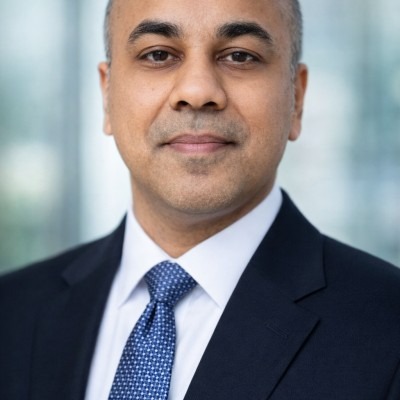
Mayur Patil
Forward-deployed AI architect, advisor and corporate trainer
Twenty-six years of engineering, most of it enterprise systems before any of it was AI. He has trained more than 3,000 engineers across India, Singapore and the Gulf, including teams at three Fortune 500 companies, and has built forward-deployed capability programmes for services firms. The four gates and five artefacts used in this programme are the method he applies in his own engagements.
Delivered Generative and Agentic AI enablement inside Walmart (Procurement, Cataloging and AP) and Novo Nordisk India, FDE capability programmes for Tredence and Persistent Systems, and recent training engagements for Credit Agricole, Mphasis, Maximus, Wipro, EY, Hexaware and Kotak Mahindra Bank.
Who this is for
Software engineers
Transitioning into enterprise AI delivery roles where you own the outcome, not a ticket queue.
AI, ML and GenAI engineers
Seeking stronger production integration, evaluation discipline and customer ownership skills.
Technical leads and solution architects
Responsible for enterprise AI implementations that must survive security review and real data.
Consultants and delivery leads
Who need to move from recommendation decks to running systems with a named owner.
Before you start
- Working knowledge of one programming language (Python recommended)
- APIs and JSON
- Git and basic testing
- Deployment fundamentals
- Prior exposure to LLM applications is helpful
This is not a beginner programming course. Fitment is confirmed on a short call before a seat is offered; preparatory learning may be recommended based on readiness.
Beyond the sixty live hours
The fee covers the platforms, the assessments and the support around the sessions, not just the sessions. Everything below is included for every participant.
Agentic assessment on AIXL Skills
Gate assessments run on the AIXL Skills platform: agentic, scenario-based evaluation of what you built and decided, with a per-gate record you keep.
Enterprise simulations on AIXL Experience
Practise discovery calls, architecture defense and stakeholder pushback in simulated enterprise engagements before you face a real one.
FDE interview-prep simulation
A simulated Forward Deployed Engineer interview loop on AIXL Experience, with feedback against the same four-gate rubric hiring panels probe.
Recordings for 24 months
Every live session is recorded. You keep access for 24 months, so a missed session or a later refresher is never a problem.
Self-paced material on AIXL Experience
Module notes, code, templates for the five artefacts and reference material, available to you on the AIXL Experience platform alongside the recordings.
Weekly office hour with Mayur
A live open session every week of the cohort for questions on your capstone, your workplace problems or the material.
Cohort community
A private cohort channel during the programme and for six months after it, with the trainer in the room.
Resume and LinkedIn review, mock FDE interview
At the end of the cohort: a review of your resume and LinkedIn against FDE roles, and one mock interview that uses your five artefacts as the portfolio.
Try the first two sessions risk-free. Full refund if you opt out before the third session.
How the cohort runs
Live, instructor-led
Sixty hours of live sessions with guided engineering exercises. Not a video library.
Weekday or weekend cohort
Weekend cohort on Saturdays and Sundays, 8:00 – 10:30 pm IST. Weekday cohort on Wednesdays, Thursdays and Fridays, 8:00 – 10:00 pm IST. Timing may be adjusted to suit all confirmed participants.
Assessed at four gates
Applied assessments at G1 Context, G2 Architecture, G3 Integration and G4 Defense & Handover, against a published rubric.
Representative enterprise systems
Capstone work against representative APIs, datasets and approval workflows, with feedback on architecture, evaluation and operational readiness.
Course completion
Course completion reflects participation and fulfillment of course requirements.
Gate-based recognition
Gate-based competency recognition is awarded only when the learner meets the defined assessment criteria at each of the four gates. Attendance alone does not pass a gate.
What we do not promise
AIXL Academy does not promise an industry-accredited credential, job placement or hiring eligibility.
One cohort. Both tracks. All four gates.
The fee covers the full 60-hour programme. Tracks are not sold separately.
- 60 live instructor-led hours across two tracks
- 15 modules with applied engineering exercises
- Assessment at four gates against a published rubric
- Five assessed artefacts and a per-gate record of what you demonstrated
- Capstone reviews and architecture defense with the trainer
- Weekend cohort from 14 Nov 2026 or weekday cohort from 18 Nov 2026 (planned starts)
- Agentic assessments on AIXL Skills, simulations and interview prep on AIXL Experience
- Recordings for 24 months, self-paced material, weekly office hour, cohort community
- Resume and LinkedIn review plus one mock FDE interview
- Course completion certificate from AIXL Academy
- Try the first two sessions risk-free: full refund if you opt out before the third session
Invoice-friendly for employer sponsorship.
Private cohort
The same programme on your own tools and use cases, from a focused track to the full 60-hour cohort, with per-person gate reporting for your leads.
- Your systems, your scenario
- Per-participant gate reports
- Schedule set with your team
- Custom pricing
Simple cohort admission process
- 01
Enquire
Share your role, experience and what you want to be able to own after the programme.
- 02
Fitment call
A short conversation to confirm prerequisites and recommend the weekday or weekend cohort.
- 03
Confirm seat
Pay online through secure Razorpay checkout (INR in India, USD elsewhere), or request an invoice for employer sponsorship. Your first two sessions are covered by the refund guarantee.
- 04
Onboarding
Environment setup, pre-reading and the capstone scenario briefing.
- 05
Start cohort
Track A begins with the operating model and your first discovery exercise.
Programme FAQ
Still have a question?
Not ready to enquire or reserve? Ask anything about the programme, the schedule, fitment or payment. Mayur replies within one working day.
Own the outcome, not the backlog.
Sixty instructor-led hours, four assessed gates, five artefacts, one working system handed over to a named owner.